For managers and leaders responsible for results

We turn AI investments into operating results.

SymbiCorAI helps you redesign how work gets done with AI and build your and your team's ability to direct it.

We start with a decision or responsibility that matters to your business. Together, we design what AI contributes, keep relevant evidence and decisions available as the work changes, and turn learning into better AI-powered workflows. You practice directing and challenging AI while we examine whether the work improves.

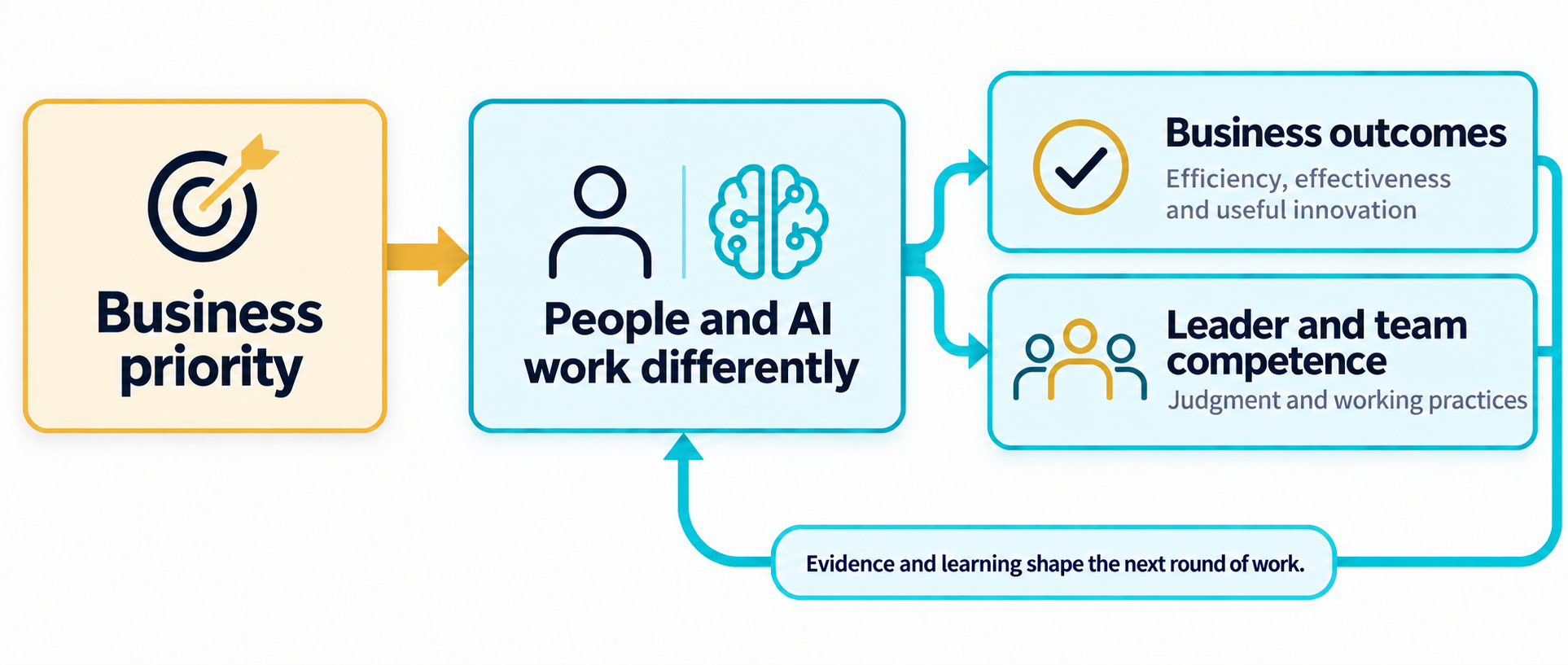
A business priority guides changes in how people and AI work. Evidence from business results and human capability informs the next round of work.
We examine whether the work improves and whether people become more capable of directing it.

How we help

Choose the help that fits what you need to accomplish.

You can work with Allan on a specific challenge or bring a keynote or workshop to your leaders. You do not need to complete a training program before starting advisory work.

Advisory and work-system development

Work on a challenge you’re responsible for.

We help you examine where AI could contribute and develop a practical way to use it. Possible assignments include:

  • Review a transformation strategy or plan against new evidence and prepare the next decision.
  • Create a Second Brain to manage a process that brings together disparate and scattered documents, conversations, evidence, and decisions.
  • Design a System of Intelligence to guide key decisions and follow through on commitments, with human review and authority.

When development is needed, we define what to build and who will do it. We agree on design and implementation scope separately, including information access, human review, and evidence of improvement.

Keynotes and workshops

Help your leaders understand and practice working with AI.

Keynotes, executive and board sessions, and hands-on workshops help leaders understand what AI changes about their responsibilities and the work they lead.

A keynote connects the larger changes to concrete examples. A workshop can give participants firsthand practice framing work, challenging AI, and considering how they would apply what they learn.

We agree on the audience, purpose, format, and scope. A session can help identify a next step; it does not establish that business performance has improved.

Play the keynote sample →

Discuss How AI Changes Organizations, Leadership, and Work

Allan’s Journey

I learned this by changing my own work.

I was already using AI to make consulting more efficient. But I believed it could change consulting more fundamentally. That belief led me and my team at TiER1 Performance, where I co-led the Partner Ecosystem business, to develop and apply a Second Brain method on a complex client engagement.

We kept the relevant evidence and decisions available as the work changed. When a colleague challenged an early playbook, we translated his presentation standards into reusable AI instructions and tested the revised work with human review.

Testing and critique improved both the system and our ability to direct AI. That recursive learning led to my ideas about Human/AI symbiosis and became the basis for founding SymbiCorAI.

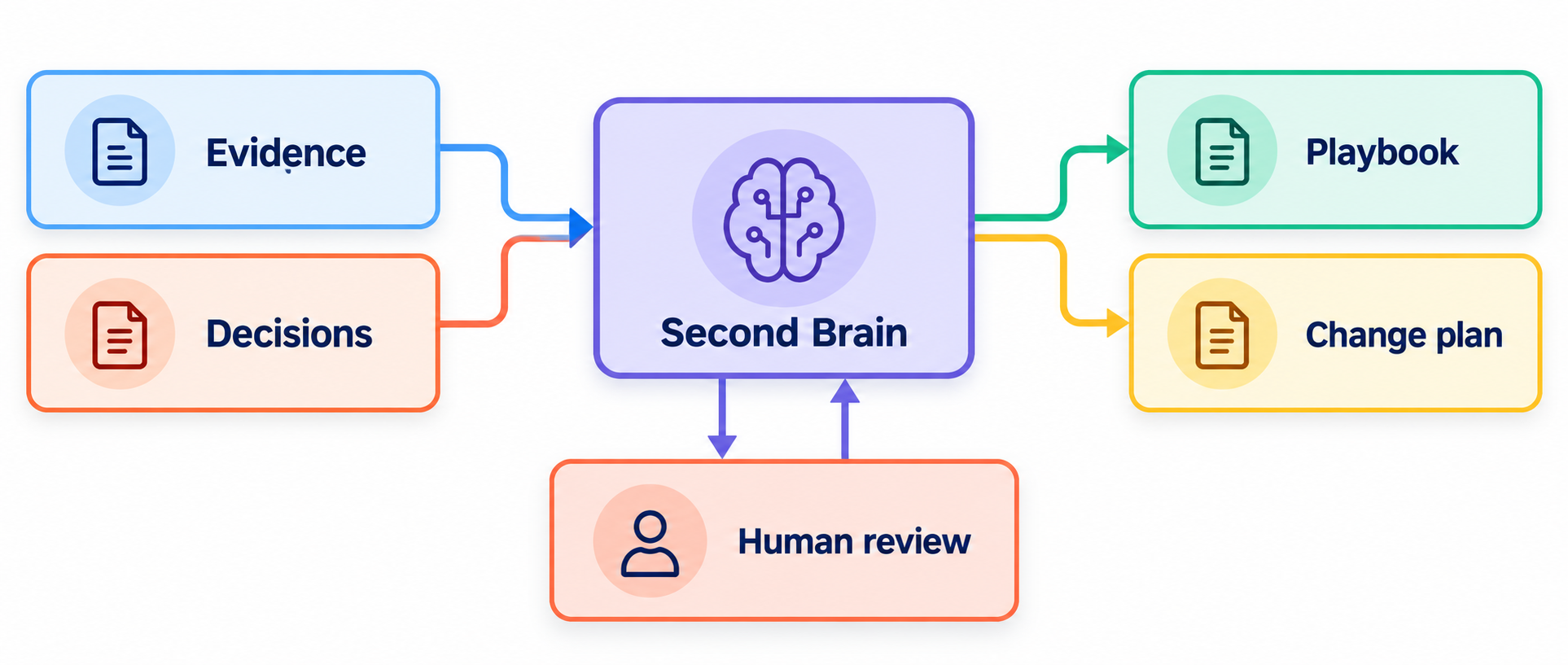
Evidence and decisions feed a Second Brain that supports the playbook and change plan. Human review sends corrections back into the working record.
The illustration explains the working process. It is not a project screenshot or evidence of measured business results.

Our approach

Improve the work while learning to direct AI.

AI can change how people find information, interpret evidence, prepare decisions, and coordinate action. We help you examine those possibilities in the work you actually do.

Find a useful starting point.

We examine the results you need and how the work happens today. Together, we identify what AI could contribute and what evidence would show progress.

Design and practice the work.

We define the contributions, information, and human decisions the work needs. You learn to frame assignments, challenge AI’s conclusions, and correct the outputs.

Test before extending.

We examine the changed work and your ability to direct it. The evidence helps us decide what to continue, revise, or stop. Team implementation requires separate agreement.

A Second Brain maintains relevant evidence, decisions, commitments, and learning. A System of Intelligence organizes recurring decisions, authorized action, and review. We use these methods where the work calls for them.

We use Human/AI symbiosis to describe the developing relationship through which people and AI contribute, learn, and improve the work together. People retain responsibility for judgment and action.

My book work on Systems of Intelligence examines work across twelve industries. That research, alongside my own experience, informs how we help you find a starting point.

View the crawl–walk–run approach →

The pace depends on readiness and evidence. You do not need to follow a fixed sequence of engagements.

Our first conversation

You do not need to know where to start.

In an exploratory conversation with Allan, we examine the results you need and how the work happens today. We compare possible starting points, consider what information AI would need, and identify which decisions remain yours.

We use COMPASS, our guided discovery tool, to explore where AI could help with your own work, how you lead, or your team’s work.

COMPASS discovery

CCharge
Purpose
OOperating boundary
Boundary
MMoving unit
Unit of work
PPersistent state
Operational state
AAction loop
Action loop
SSignals for revision
Feedback and revision
SStewardship
Authority

We will ask:

  • What result are you responsible for, and what are you being asked to show about AI?
  • Where does the work require repeated reconstruction, difficult judgment, or coordination that gets in the way?
  • What would you like to accomplish that is not practical today?
  • How would we tell whether a change helped?

We aim to identify a possible starting point and a next step to investigate. Missing information or a prerequisite may need attention first. The conversation does not commit you to an engagement.

Share only information you are authorized to discuss.

Before we begin

What might a first assignment involve?

A recurring review or decision can provide a starting point. We can examine how you prepare, what information you use, and where AI could help. Before working together, we agree on the assignment, participants, supporting tools, and evidence to examine. Any design or implementation work is scoped separately.

Do I need a particular tool or an assessment first?

You do not need to select a technical solution or complete an assessment before talking with Allan. We agree on tools and permitted information as part of the work. The optional Agentic Competency assessment provides a private developmental profile, not certification or proof of business performance.

How do we decide whether the work improved?

We agree on the goal and evidence before implementation. We examine the effort required, the quality of decisions and actions, and whether a new way of working proves useful. We also assess whether you and your team become more capable of directing AI.

Partnership work examples

See how we applied the methods to partnership work.

The Partnership Second Brain explores how to maintain relationship context. A separate planning tool examines a plan against current evidence and prepares a proposed next action for human review.

Both came from our own ideation and development. They are free controlled-alpha examples, not products for sale or required starting points. They are not integrated, and their intended benefits still need testing in your work.

Our six-slide presentation explains the problems, how we approached them, and what the examples can and cannot do.

About Allan Adler

Four decades of enterprise experience applied to AI.

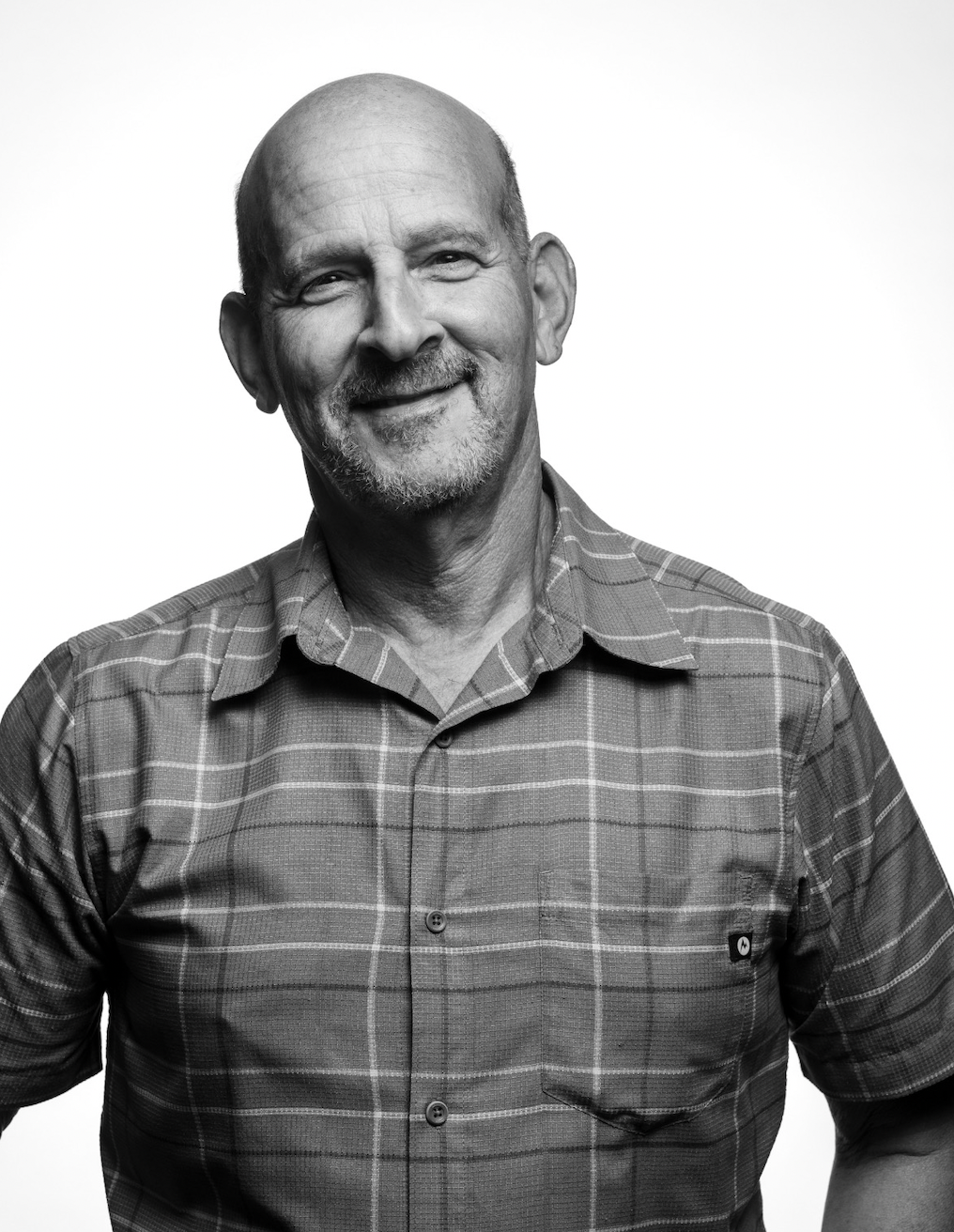
Allan Adler, founder of SymbiCorAI

Allan founded SymbiCorAI to help leaders turn AI investments into operating results. His experience spans strategy, technology, organizational change, and partnerships.

He founded MSI Consulting Group, a 100-person technology strategy firm, and later served as Managing Partner and Chief Ecosystem Officer at Digital Bridge Partners. Earlier, he worked at Deloitte and The Boston Consulting Group. Allan earned his MBA at Harvard Business School as a Baker Scholar and is a CPA.

Email Allan · 425-239-8774 · LinkedIn

The forthcoming book

Systems of Intelligence: Human/AI Symbiosis examines how people and AI can change work while people retain judgment and authority.

Explore the book →

Your work is the starting point

Let’s explore how AI could improve the results you’re responsible for.

Bring the responsibilities and results that matter to you. We can explore how to redesign the work, what you and your team would need to direct AI, and how we would judge improvement. Any working engagement is agreed separately.