Allan’s Journey
How I learned to change the work with AI
I was already using AI to make meeting notes and consulting preparation more efficient. But I believed AI needed to change consulting more fundamentally—not just help us produce the same deliverables faster. That belief led me and my team at TiER1 Performance, where I co-led the Partner Ecosystem business, to develop and apply a Second Brain method on an engagement with a major software company. Our assignment was to help its enterprise sales team work more effectively with global system integrators, through a playbook and a change plan.
We built a Second Brain around the work
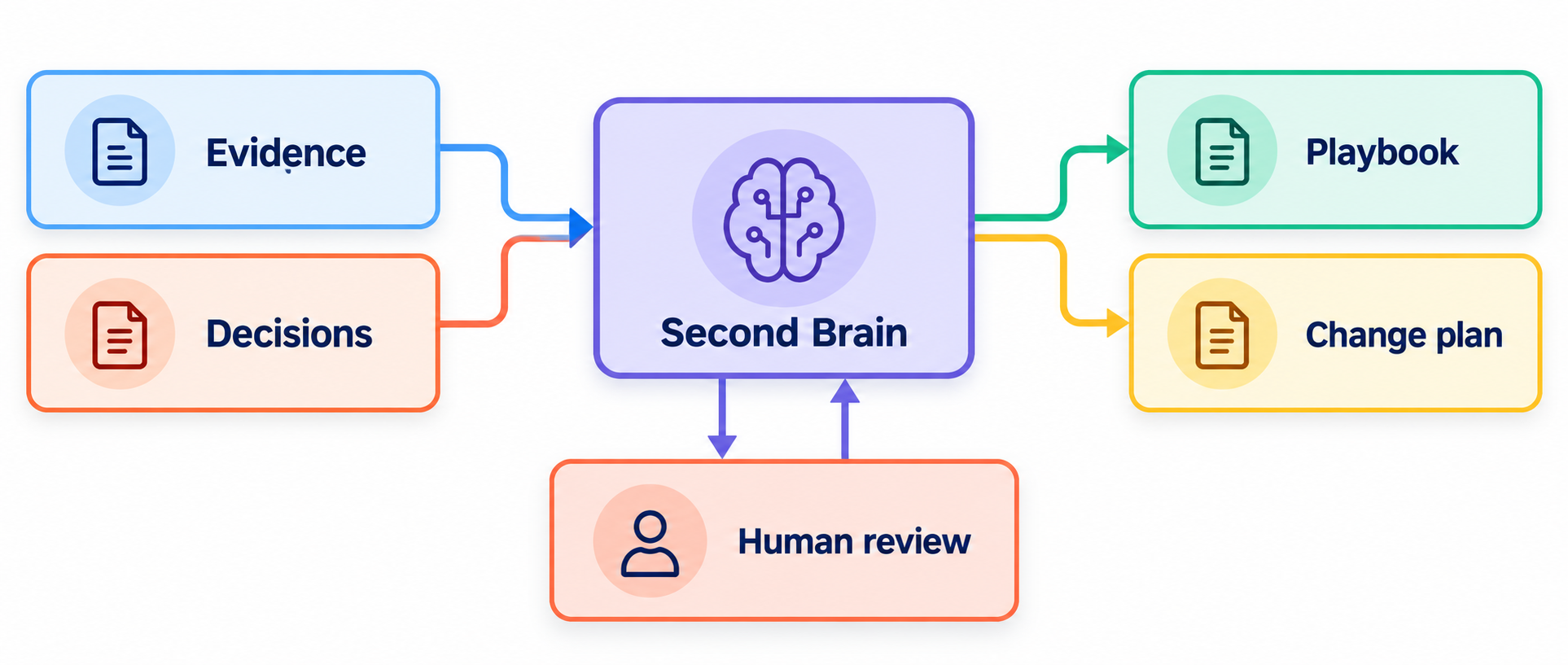
The Second Brain became a maintained, governed working record for the engagement. It connected existing client materials, a constituent map, tailored interview guides, and interview findings. We routed evidence to the issues and customer segments it concerned, preserving whose knowledge mattered to each question. That record supported the playbook, an ADKAR-informed change plan, and reusable workflows for producing and reviewing presentations.
We treated the Second Brain and AI as a working contributor: assigning tasks, debating interpretations, and checking outputs with people. The context stayed available as the work evolved. The important investment was becoming clear: architect the system that produces and improves the deliverables.
The work taught us how to make the system better
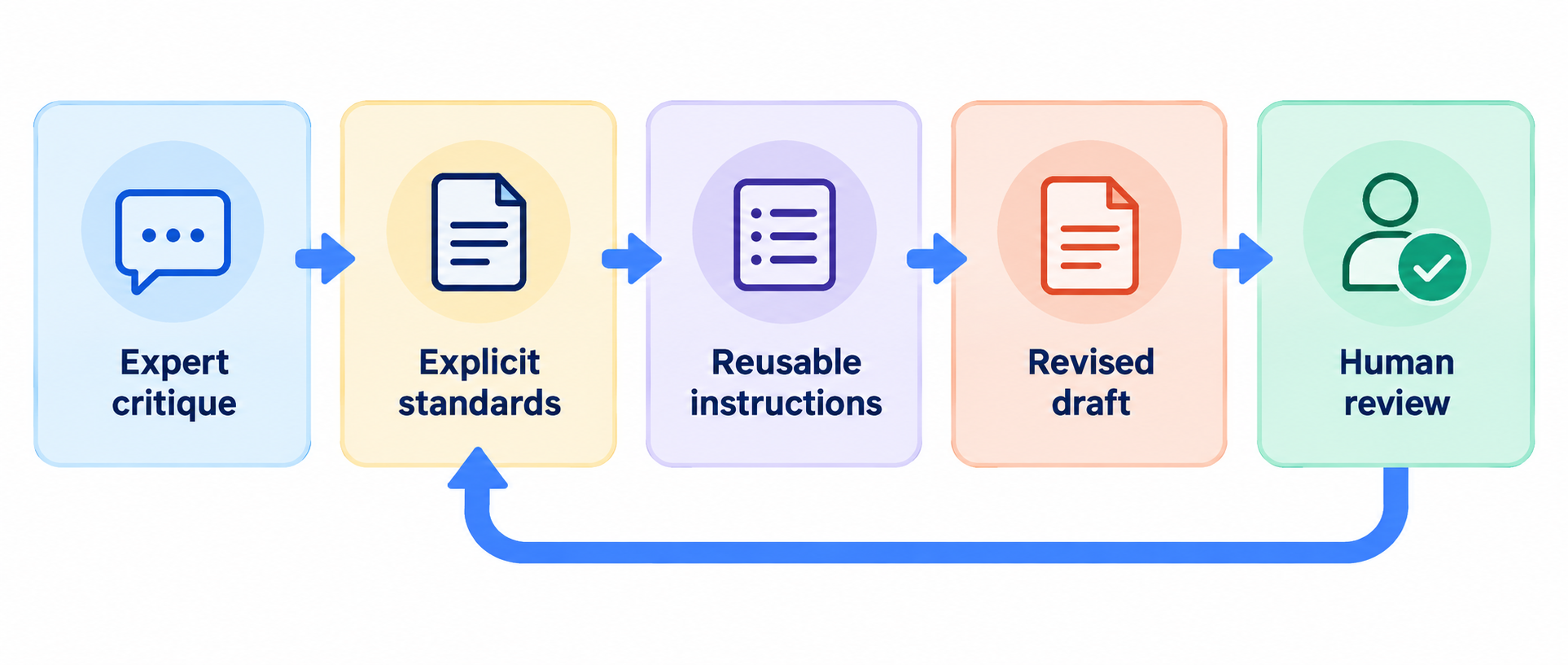
A colleague tore apart an early playbook draft. Rather than only fixing the slides, I asked him to explain his standards for storytelling, coherence, titles, and subtitles. We translated that expertise into reusable AI instructions. The next version came closer to his expectations, with human review still necessary. Each cycle of assigning, testing, and correcting the work improved the system and our ability to direct it. That recursive learning led to my ideas about Human/AI symbiosis: people learn to work more effectively with AI, and use that growing competence to improve the work.
That foundation helped us handle two major pivots
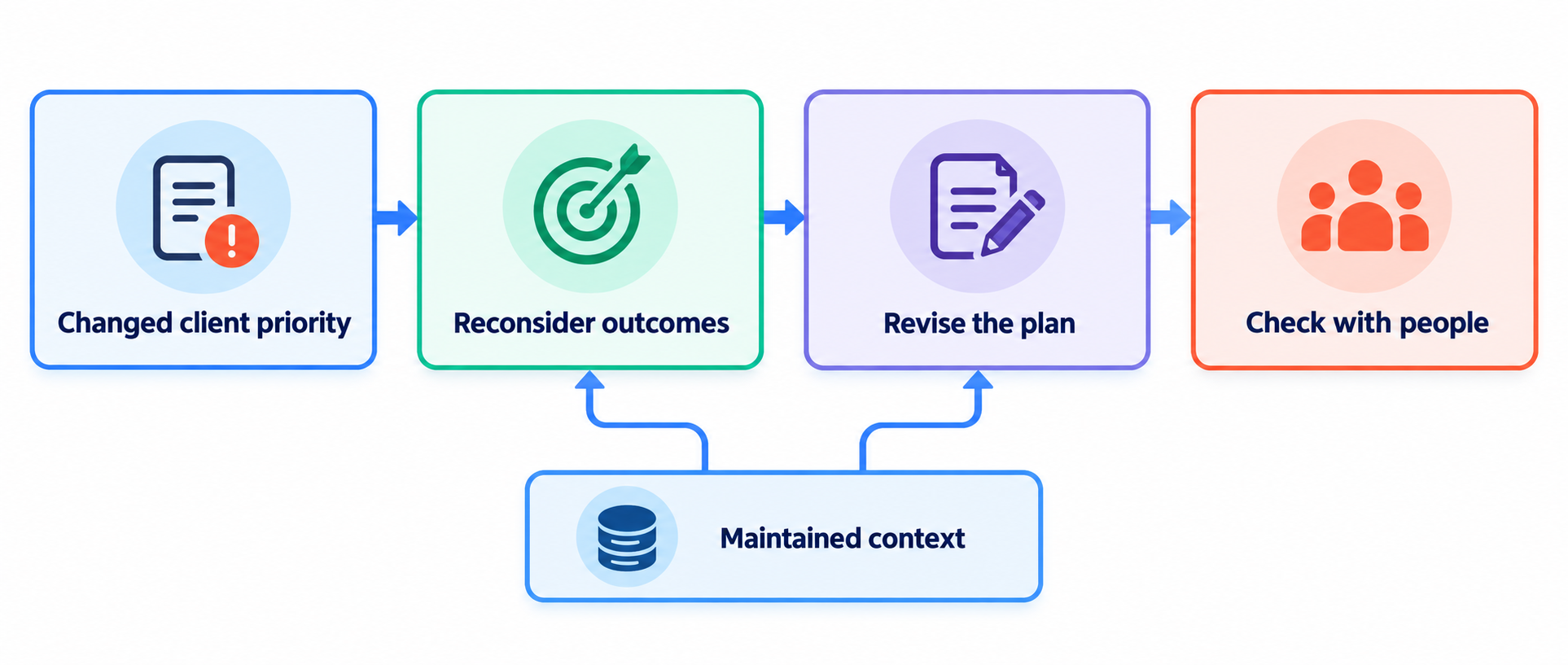
The substance changed: the evidence did not justify a simple revenue-attribution story. We reframed the playbook around partner alignment with the client's AI roadmap and customer adoption. Then the implementation horizon changed from twelve months to three: the client wanted selected practices happening in the field, not just preparation.
We used the maintained evidence and frameworks to rethink outcomes, simplify the plan, and revise the deliverables. The reusable production skills helped us communicate the changed story. We tested and corrected both substance and presentation instead of rebuilding from scratch.
The change extended beyond our own work
The client's partner team began using the work to secure sales-leadership support; broader implementation is still underway. Our wider partner consulting team incorporated Second Brain methods across many projects, with broader use expected. This is an evolving way of working, not a finished transformation.
That journey brought me to SymbiCorAI: help people identify consequential work, build the system to support it, learn to steer AI effectively, and test whether the work improves.
From managing projects to managing partnerships
We then applied the method to specific partner relationships our team managed. The work changed: we were managing actual partnerships, not delivering a consulting project about them. That application became the Partnership Second Brain, using maintained context to support partnership decisions, commitments, and follow-through. It developed through real partner activity and continues to evolve.
Your work is the starting point
You do not need to be a consultant or run a project like mine. We start with the results you are responsible for, explore where AI could contribute, and consider how the work would change. Then we identify what we would need to demonstrate before calling it an improvement.